
The Hydration Hydraulic: Why Holiday Travel Makes Aging Parents Dizzy (And How to Prevent It)
It Isn't Clumsiness. It’s Physics.
As we enter the peak of holiday travel, you might notice something unsettling about your aging parent. After a long car ride or a cross-country flight, they finally stand up to greet you—and they wobble. They might reach for a chair, stumble, or complain of sudden dizziness.
It is easy to dismiss this as general aging or simple clumsiness. However, from a structural standpoint, what you are witnessing is a specific mechanical failure of the body’s internal plumbing: the "Hydration Hydraulic".
Travel creates a unique storm of risk factors—disrupted schedules, missed meals, and long periods of immobility. When combined, these factors attack the body's ability to fight gravity, leading to a condition known as Orthostatic Hypotension.
The Mechanics of the Fall
To prevent the fall, we must first understand the mechanism behind it. Orthostatic Hypotension is not a reflex problem; it is a perfusion problem. It is a failure to get fuel to the engine when the demand is highest.
When a younger person stands up, their body instantly compensates for the change in posture. But for an aging adult, the process often suffers from a critical lag.
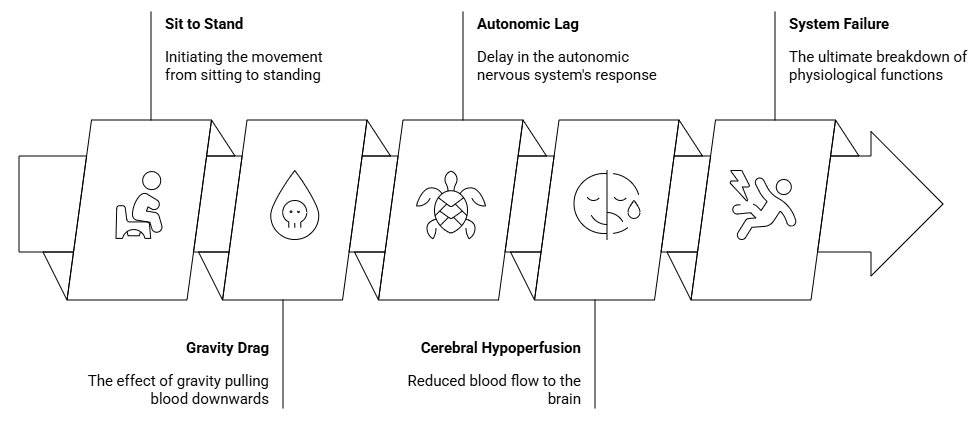
Here is the physiological cascade that leads to the "wobble":
- The Trigger (Sit to Stand): The movement initiates a demand on the cardiovascular system.
- Gravity Drag: Gravity immediately pulls blood volume down into the legs, away from the core.
- The Lag (Autonomic Mismatch): Due to aging or medication side effects, the nervous system is slow to respond. The "pump" fails to push blood back up against gravity.
- The Void (Cerebral Hypoperfusion): This lag creates a temporary void where less blood reaches the brain precisely when balance is needed most.
- System Failure: The brain, starved of oxygenated blood, causes dizziness or a loss of consciousness, resulting in a fall.
The Cost of Gravity
Ignoring this "wobble" carries a staggering price tag. We often focus on the fear of falling—the visible hesitation we see in our parents. But that fear is just the tip of the iceberg.
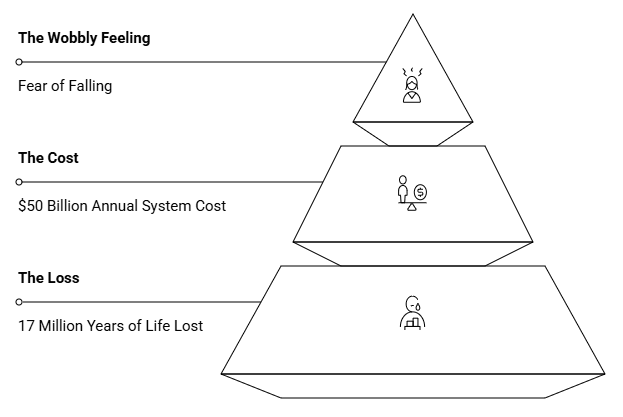
Below the surface, the systemic costs are immense.
In the US alone, the economic toll of falls hits $50 billion annually. Globally, we lose 17 million years of life to these preventable events.
However, this is a high-stakes environment where we have control. The risk is modifiable.
Data shows that targeted interventions, such as medication reviews to identify Fall-Risk Increasing Drugs (FRIDs), can reduce fall rates by up to 64%. We do not have to accept these statistics; we can manage the variables.
The Solution: The "Pre-Flight" Check
You wouldn't let a pilot take off without a checklist. You shouldn't let an aging parent stand up after a long journey without one, either.
To manage Orthostatic Hypotension, we must activate the "Hydration Hydraulic" before the demand is placed on the system. We call this the Operational Readiness Check.
This protocol integrates three critical variables to stabilize the system:
1. Hydraulic Activation: Before they stand, encourage mechanical activation of venous return. Simple foot pumps and hand clenches help push pooled blood back toward the core and heart.
2. System Fueling: Fluid volume management is non-negotiable. Ensure adequate hydration and avoid alcohol, which acts as a depressor on the system, to maintain the blood volume needed to fight gravity.
3. Air Traffic Control: This is the logistical step. Inventory their medications for a review with their doctor. Many common medications can sabotage blood pressure regulation. Note: We build the dossier; the physician manages the prescription.
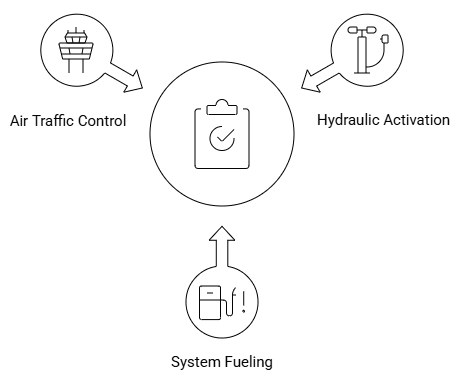
When you control these three inputs, you stabilize the output. You move from a reactive position of "being careful" to a proactive strategy of hemodynamic management.
Don't ignore the wobble. Plan the transition. Secure the passenger.