The Multitasking Tax: How to Protect Your Parents from the Hidden Cognitive Risk of Falls
The Stakes: When Cognitive Decline Doubles Fall Risk
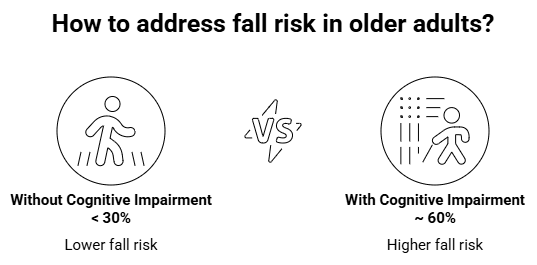
An older adult with no cognitive impairment has, on average, a less than 30% chance of falling in a given year. However, for a senior with even mild cognitive impairment, that risk doubles to approximately 60%.
This isn't a small multiplier; it's a fundamental change in the risk profile. It proves that any effective fall prevention plan cannot be limited to standard exercise alone. It must address the cognitive variable. Preparing for a doctor's visit with this understanding allows you to ask more targeted questions about how a parent's cognitive health is being factored into their stability plan.
The Solution: Rebuilding the Brain-Body Connection
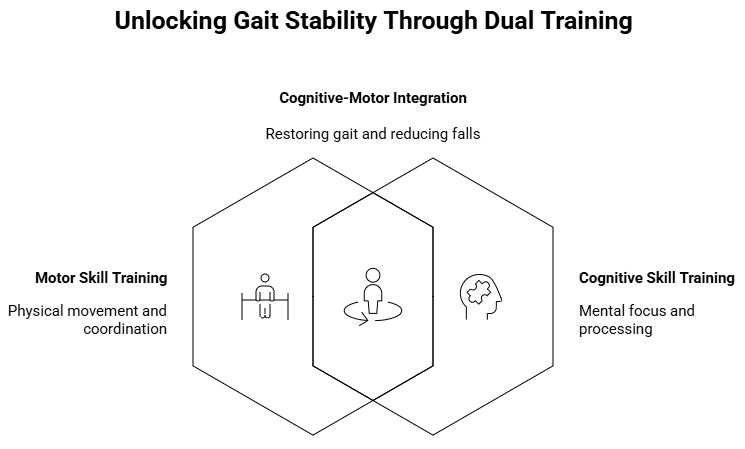
- Motor Skill Training: This includes the necessary physical work, like targeted exercises to improve balance, gait coordination, and functional strength.
- Cognitive Skill Training: This sharpens the mental systems needed to react and adapt, focusing on attention, memory, and processing speed.
The real breakthrough occurs in the integration. By deliberately training both domains at the same time—for example, performing a balance drill while doing a memory task—we help the brain forge a new, robust cognitive-motor link.
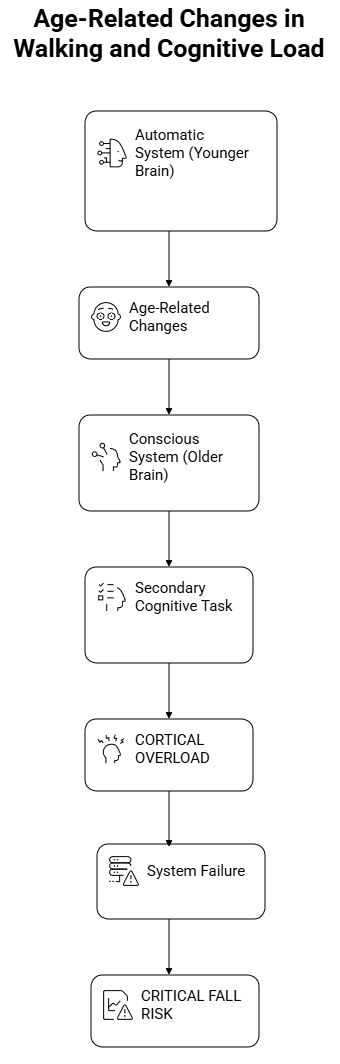
This process facilitates neuroplastic changes, shifting balance control from conscious, high-effort deliberation back toward the resilient, automatic responses that keep us stable.
When discussing program options with a rehabilitation professional, asking how they facilitate this specific type of integration is a high-value question.